
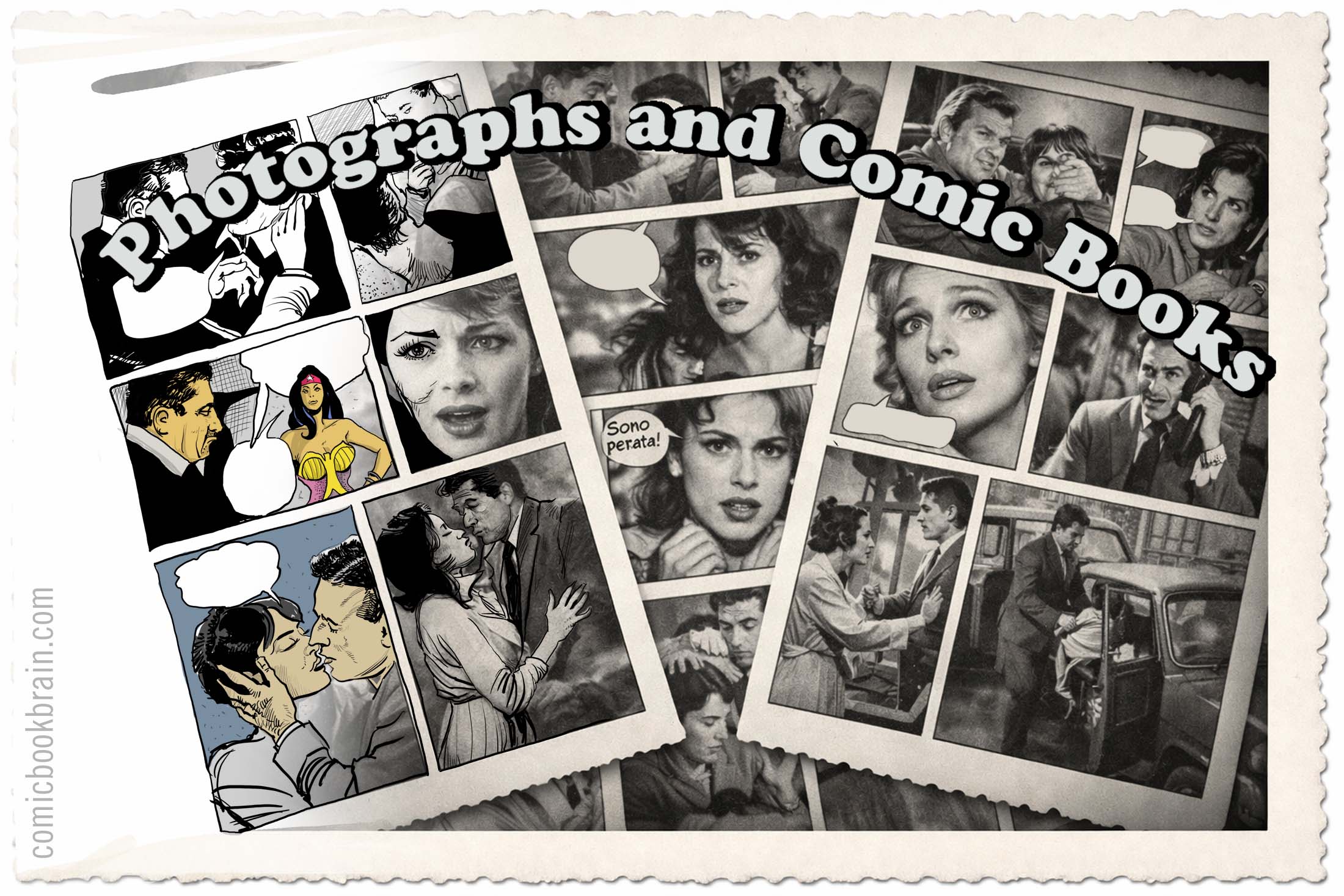
Comic Books, photographs, fotoromanz, and AI
Favorite Gold Key adaptations of TV shows – 13th Dimension
...the 1960s was a kind of Golden Age of comic book movie and television adaptations, with Dell and Gold Key especially licensing just about anything and everything based on the latest TV shows..."
Photographs and Comic Books
When I was a kid buying* comics off newsstands, TV-show adaptations (like the Gold Key titles) were generally viewed as down-market products, with Disney comics being the main exception. This was also true when it came to trading comics, which was how we gained access to older books, since there were no comic book stores in those days. This attitude meant that Gold Key comics could often be traded in multiples for a single regular DC or Marvel superhero book.
On the other hand, there were kids for whom a TV-show adaptation comic was important because of (what I assume in hindsight was) their dedication to that particular TV show. At the time, I disdained those sorts of comic books with photographic covers, reacting as if they were a kind of aposematic signal, a warning of the inferior, cheap contents inside.
Imagine my consternation when I spent some time in Naples, Italy, and saw that country’s fotoromanzo comic books (photo storytelling comics with black-and-white photo interiors) pinned up at kiosks (edicole) on the streets right next to the many full-color Italian comics and magazines, along with the occasional English-language Marvel comic book (I didn’t see any DC books treated that way in Italy or Greece during the years I was there as a kid). Those kiosks offered a revealing cross-section of the comic formats of the time. At one end were the photo-based fotoromanzi. At the other were the “micro-schema” comic books—usually war or adventure stories with intricately drawn black-and-white interiors in a pocket-sized format. They had violent, colorful covers and, perhaps most importantly, though small, they were fairly thick and yet inexpensive to buy.
Part of the dilemma for Gold Key books, and for comic books in general at that time, was the popularity of certain comic-book art styles, which was one of the main drivers, if not the main driver, of interest in a title for many of us. Alex Toth and other artists whose styles were unconventional compared with the dominant Romita or Neal Adams "look" (this is 1970–1976 era thinking) were grudgingly appreciated because of their sheer storytelling power. It wasn’t articulated that way then, but I think it was a gut response to enjoying a well-told story, supported by all the panel art needed to tell it fully and effectively.
Looking back now at that time and the fashions of the moment, I think those older artists’ styles (like Toth’s) conveyed a misleading surface simplicity. To some of us it “looked wrong” because it lacked the obsessive embellishment of muscles. That tension between comic-book styles is still as common today as it was then, but the use of photographs on comic-book covers has changed. Variant "photo" covers now appear on many 21st-century titles, and the growing influence of AI-generated art shows an increasing fusion of photographic imagery with hand-edited artistic effects shaping the final composition. In a sense, this hybrid approach has its roots in the Gold Key photo-cover comics of the 20th century, which in retrospect almost seem like a tacit admission that the artists involved could not always be trusted to capture convincing likenesses of the television stars whose shows were being adapted. That emphasis on presenting the celebrity "correctly" reflects a divide between comic-book art valued for its expressive qualities and the medium being used to reproduce familiar and unquestionable iconography.
*Originally Hot Stuff and Little Lulu
ADVERTISEMENT: You will see Amazon links on this web site because I am an Amazon affiliate. If you buy something rom them they might throw me a few coins and then I'll buy a comic book.

Original Page March 23, 2025